Top 5 Language-Learning Apps for Busy People
No time for a classroom course? Here are the 5 best language-learning apps for busy people in 2026 — audio-first, five-minute drills, and more — with pricing, pros, cons, and who each fits.
What "Busy" Actually Changes About the Right App
The best learning apps for busy people share one trait: a unit you can finish in five to ten minutes. That single constraint rules out a lot of otherwise excellent language courses — not because they don't work, but because an app that works well for a complete beginner learning Spanish will not work well for an intermediate learner trying to reach fluency in Japanese, and the apps that get the most attention in roundups are often the ones with the biggest marketing budgets rather than the best fit for a packed schedule.
Apps are more effective when paired with feedback — how fast you actually learn depends on tutoring, speaking, and accountability as much as time spent in the app.
The picks below lean toward apps that build speaking into the short session itself, not just vocabulary drills.
⓵. Pimsleur: Best for Hands-Free, Audio-Only Learning
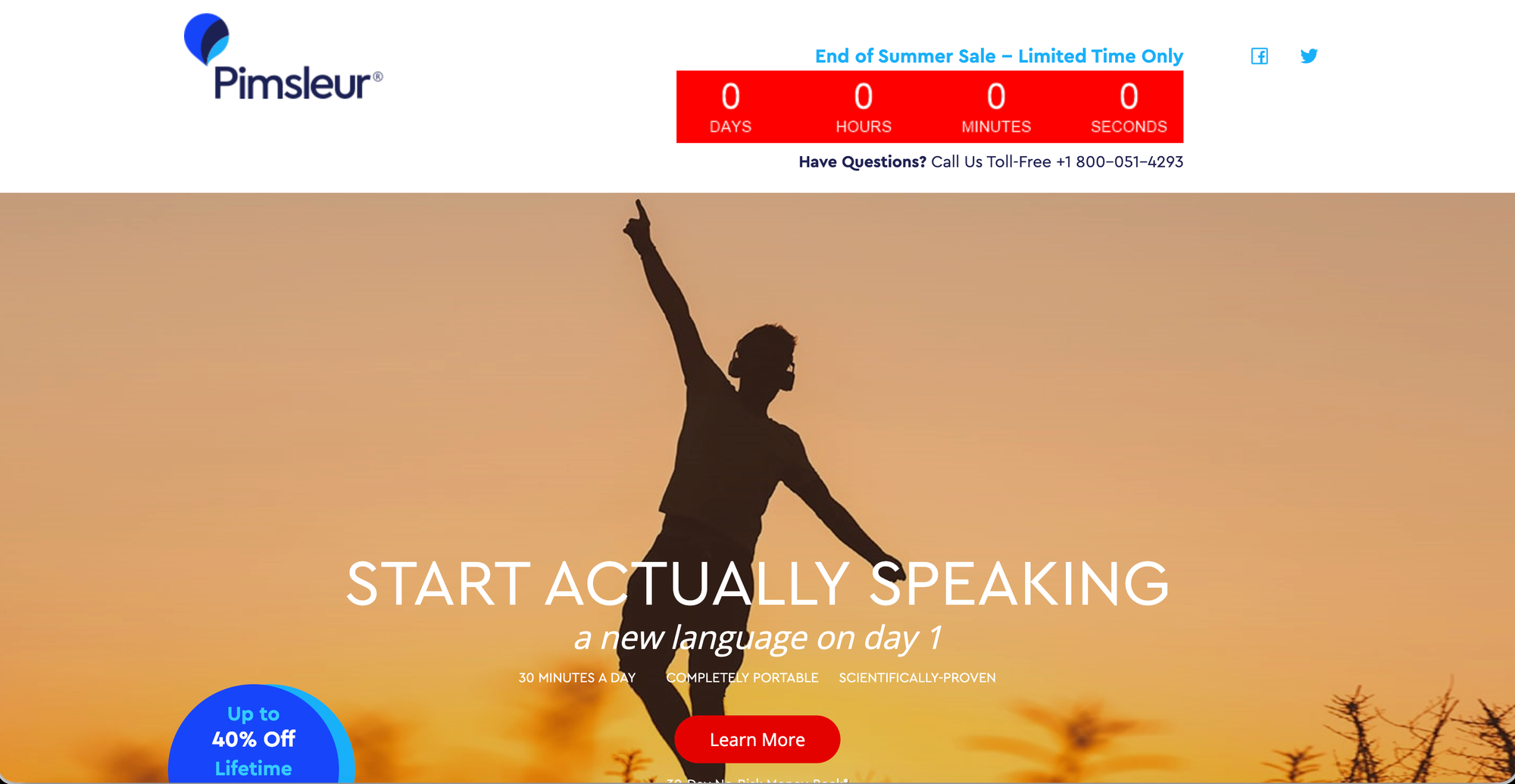
For people who spend a lot of time commuting, exercising, or away from a screen, Pimsleur is one of the most convenient ways to fit language learning into a busy schedule.
It's the best option for learners who spend a lot of time driving, commuting, or doing tasks where looking at a phone isn't practical — the method builds strong pronunciation and natural-sounding spoken output faster than most apps, and it's one of the few apps that covers genuinely obscure languages.Since you don't need to look at a screen, it's perfect for hands-free use while you jog, walk the dog, or fold laundry, and it forces you to speak out loud from day one.
⚡️Spotlight
- 30-minute audio-only lessons, no screen required
- Speak-from-day-one method (core pedagogy)
- Spaced repetition built into lesson structure
- Covers many less commonly taught languages
- Mobile app with offline download for lessons
🙋🏼♀️ Merits
- Builds strong pronunciation and speaking confidence.
- Great language selection including rarer languages.
- Spaced repetition reinforces retention automatically.
🙅🏼♀️Demerits
- Pricier than most competitors.
- Audio-only format isn't for visual learners.
- Limited grammar explanations.
🙌🏼 Best for: Anyone whose "free time" is spent driving, walking, exercising, or doing chores — not sitting at a screen.
💰 Pricing:
- 7 day free trail is available.
- Audio-Only for $14.95/month/ language ; Premium for $19.95/month/language ; All Access for $20.95/month/ for all available languages.
⓶. Duolingo: Best for Building a Daily Habit
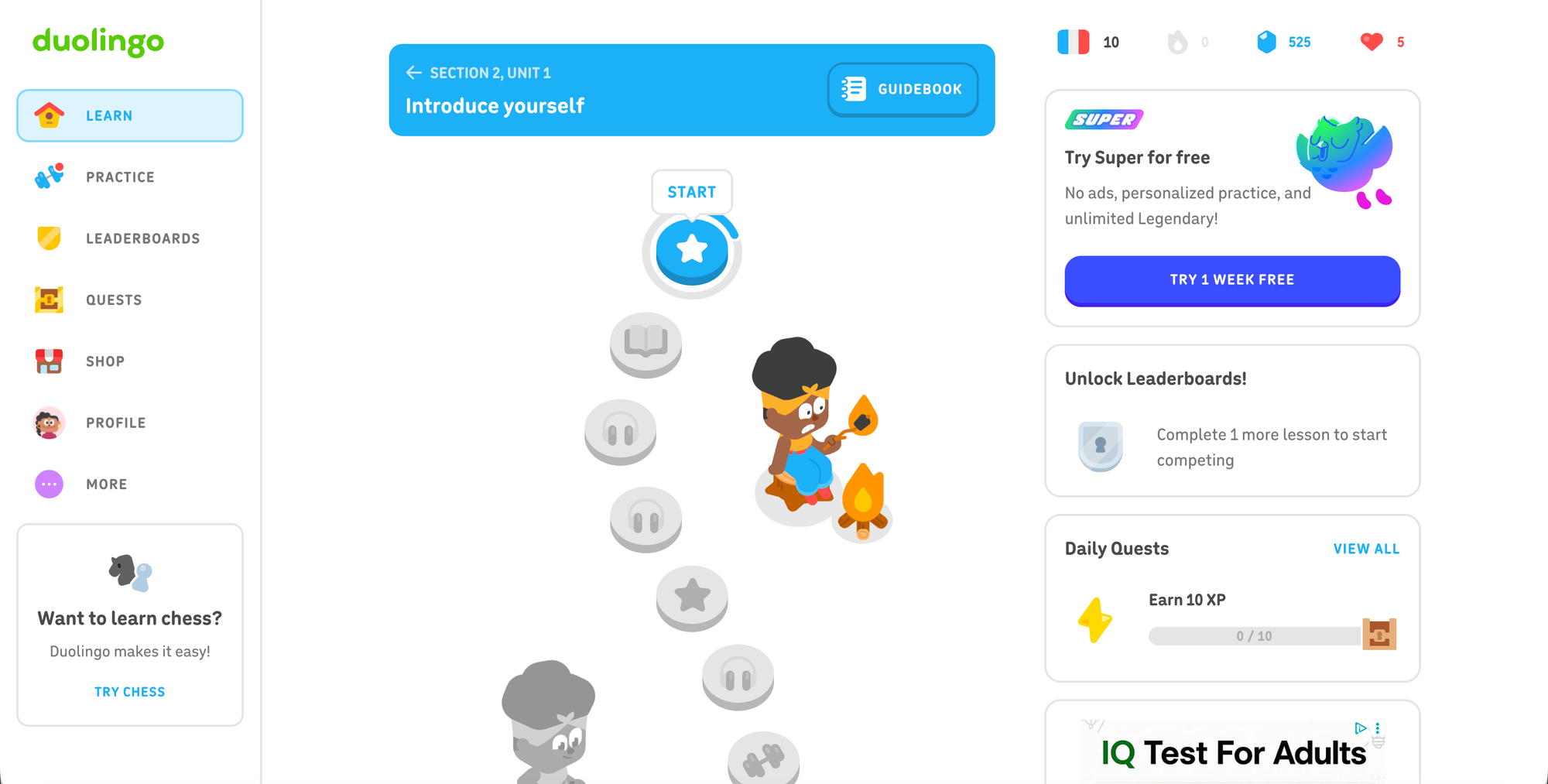
Duolingo is the most downloaded language learning app in the world, and it's still the gold standard for learning a language in the cracks of a day — the reason is the streak,which turns a few minutes a day into a habit that survives a genuinely packed week. Its gamified lessons are built for daily study habits and basic vocabulary foundations.
⚡️Spotlight
- Gamified, bite-sized daily lessons
- Streak tracking and daily reminders
- 40+ languages available
- Leaderboards and achievement badges
- Free tier with full core content access
🙋🏼♀️ Merits
- Huge language selection.
- Best habit-building mechanic ( the streak)
- Extremely low barrier to start ( just a few min a day).
🙅🏼♀️Demerits
- Limited real conversational practice.
- Gamification can feel repetitive long-term.
- Grammar explanations are minimal.
🙌🏼 Best for: Busy people who struggle with consistency more than time — the habit mechanics do a lot of the work of keeping you showing up.
💰 Pricing:
- Free includes full courses and streaks.
- Super Duolingo (Individual)for $12.99 to $14.99/month.
- Super Duolingo (Family Plan) for $120 to $143/year.
⓷. Drops: Best for Five-Minute Visual Sessions
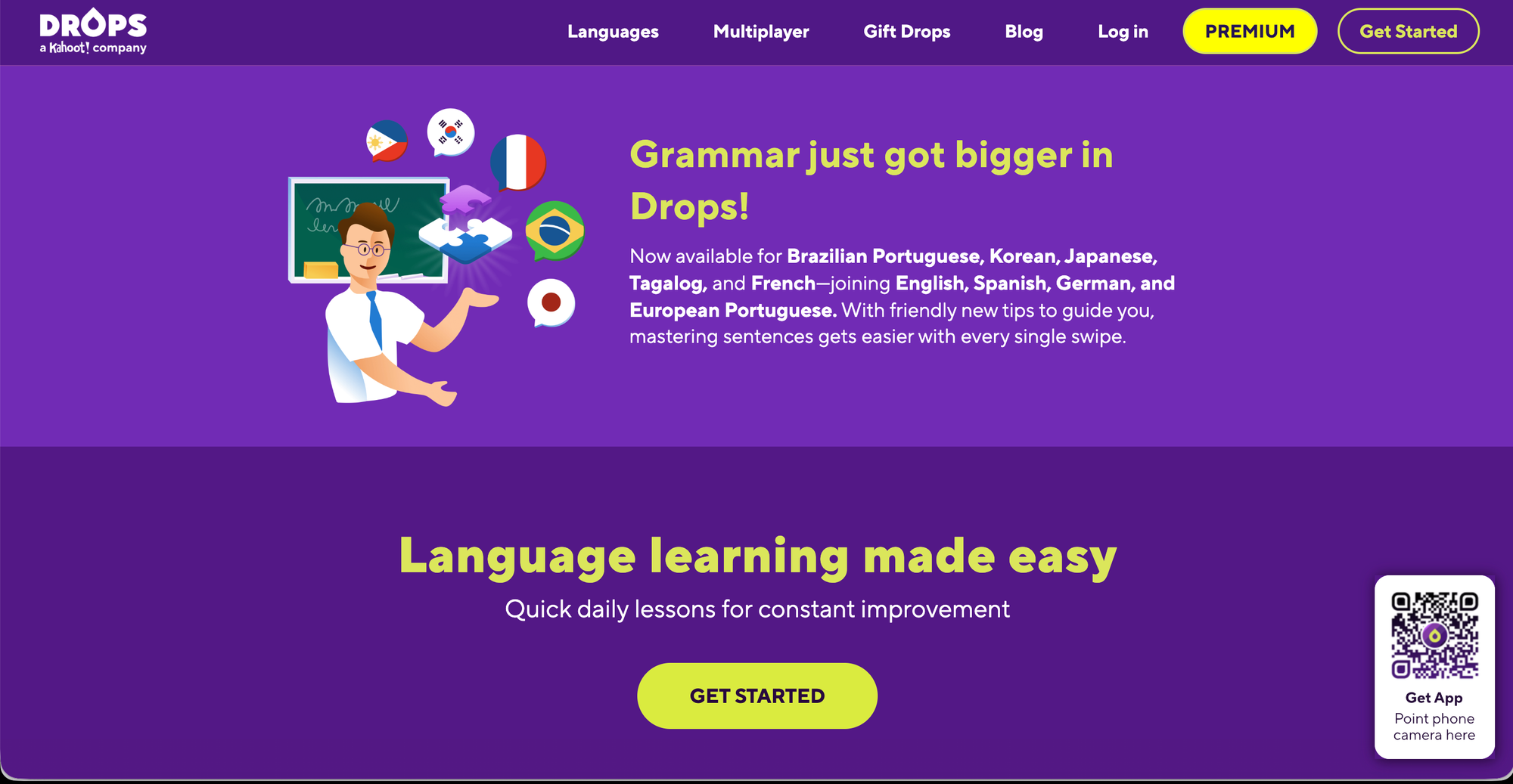
Drops is built for busy users, with standout five-minute visual drills. It transforms traditional vocabulary memorization into a visually engaging, fast-paced matching game, relying on a minimalist UI and illustration-based exercises that build strong mental associations between new terms and images, bypassing the need for translation. It also covers a vast library of over 50 languages, including many less commonly taught options.
⚡️Spotlight
- Five-minute visual matching-game drills
- Illustration-based vocabulary (no translation needed)
- 50+ languages including less common options
- Minimalist, fast-paced UI
- Free daily session limit, unlimited on paid tier
🙋🏼♀️ Merits
- Visually engaging - story for visual learners.
- Fast, satisfying game like sessions.
- Shortest daily commitment of any app on this list.
🙅🏼♀️Demerits
- Free tier capped at limited daily time.
- No speaking or grammar instruction.
- Needs pairing with another app for full fluency.
🙌🏼 Best for: Visual learners who want the shortest possible daily session and a wide range of language options, including less mainstream ones.
💰 Pricing:
- Free daily sessions available.
- Drops premium for $ 13.26/monthly ; $ 71.45/yearly and $ 163.32/one time purchase.
⓸. Babbel: Best for Practical, Real-World Conversations
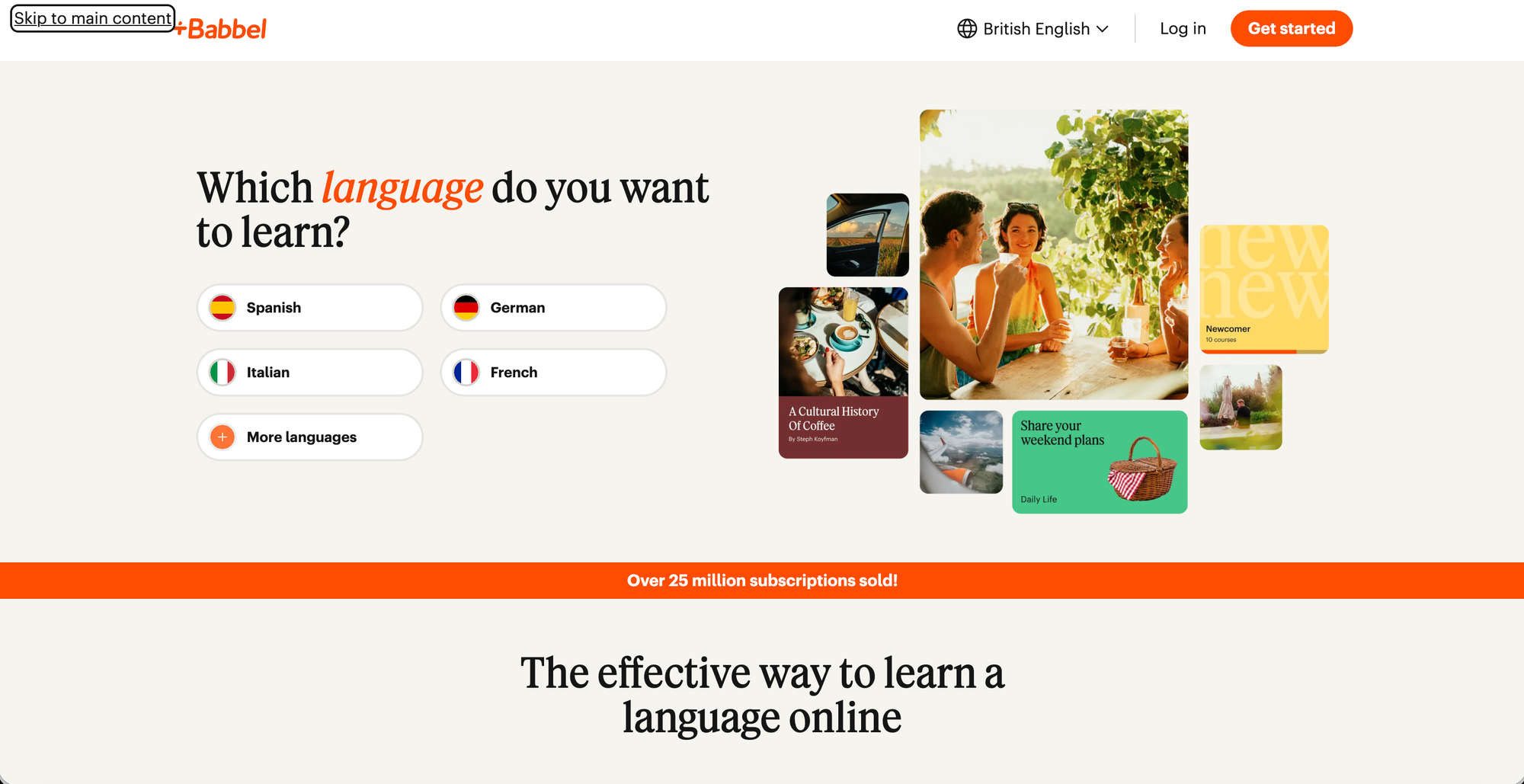
Babbel is best for structured learning, with clear lesson progression and grammar explanations built specifically around practical conversations for professionals, travelers, and everyday situations. Babbel and Pimsleur are consistently the top picks for busy adults specifically because their lessons are short, practical, and easy to fit into a packed schedule.
⚡️Spotlight
- Structured lessons with grammar explanations
- Real-world, practical conversation phrases
- Speech recognition for pronunciation practice
- Review exercises built into lesson flow
- Built for professionals, travelers, everyday use
🙋🏼♀️ Merits
- Clear grammar progression, not just vocabulary.
- Short, focused lessons fit busy schedules.
- Straong balance of structure+ practical conversation.
🙅🏼♀️Demerits
- No free tier - paid from the start.
- 3 month minimum commitment typical.
- Smaller language catalog( 14 languages)
🙌🏼 Best for: Busy professionals who want usable, real-world phrases rather than gamified drills, with enough structure to actually track grammar progress.
💰 Pricing:
- for 12 months at $ 9.03 /month/individual ; Lifetime at $ 339.02/individual.
- For group upto 6 users ( 3 months) at $ 30.46 /month ; 12 months at $ 15.23/month.
⓹. Lingopie: Best for Learning Through TV and Entertainment
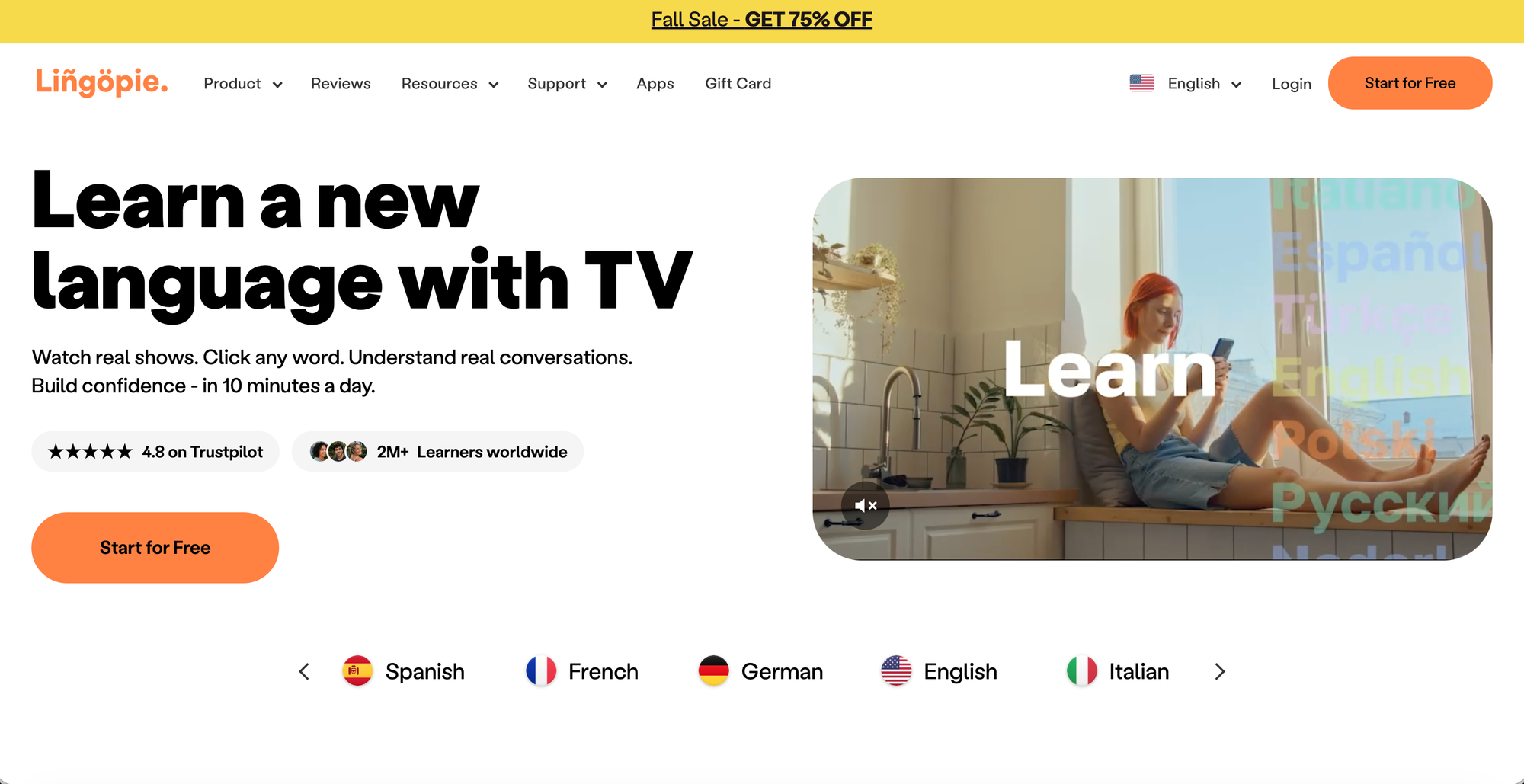
Lingopie is built around learning through TV shows and movies, giving busy people a way to fold language practice into time they're already spending unwinding, rather than carving out a separate study block. It's a great alternative if you'd rather learn through entertainment than traditional study.
⚡️Spotlight
- Learn via real TV shows and movies
- Interactive subtitles with click-to-translate
- Vocabulary tracking from watched content
- Flexible, entertainment-based sessions
- Immersive, native-speed listening practice.
🙋🏼♀️ Merits
- Great for authentic listening comprehension.
- No extra time commitment needed.
- Genuinely engaging, doesn't feel like " studying".
🙅🏼♀️Demerits
- Not structured - no clear curriculum.
- Limited speaking practice.
- Less effective for true beginners.
🙌🏼 Best for: People who already watch a lot of TV or streaming content and want their existing downtime to double as practice.
💰 Pricing:
- 7 days free trial available.
- 3 month plan for $ 13.99/mo ; Yearly for $ 6.99/mo ; lifetime for $ 194/one time purchase.
Summary
If your day looked like this, here's your app
🚗 Stuck in the car, on a run, or doing chores → Pimsleur. You don't even need to look at a screen — just put in your earbuds and start talking back.
📱 You check your phone a hundred times a day anyway → Duolingo. The streak will guilt-trip you into opening it between emails, and that's exactly the point.
⏱️ You genuinely only have five minutes, max → Drops. No lesson, no streak pressure — just a quick visual game and you're done.
💼 You're learning for an actual trip or job, not just for fun → Babbel. Structured enough that you'll walk away with phrases you'll actually use, not just app points.
🍿 You're already binge-watching something tonight → Lingopie. Don't add a task — just turn your Netflix hour into a language lesson in disguise.
"The busiest people don't find more time to learn a language — they just stop waiting for time that was never going to show up."